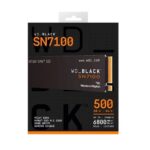
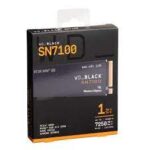
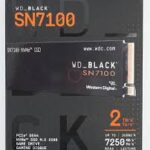
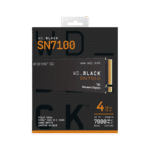
Description
Key Specifications
| Spec | Details |
|---|---|
| Interface / Form Factor | PCIe Gen4 ×4, NVMe; M.2 2280 form factor. |
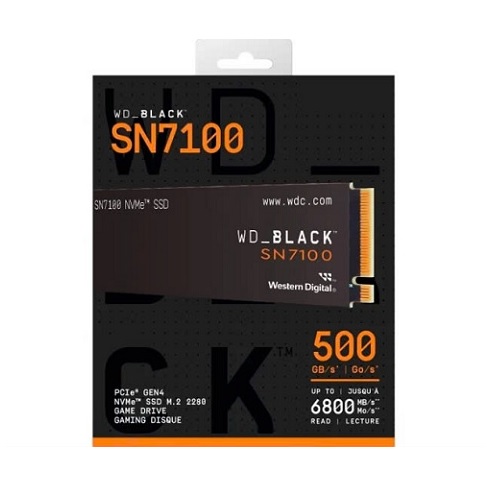
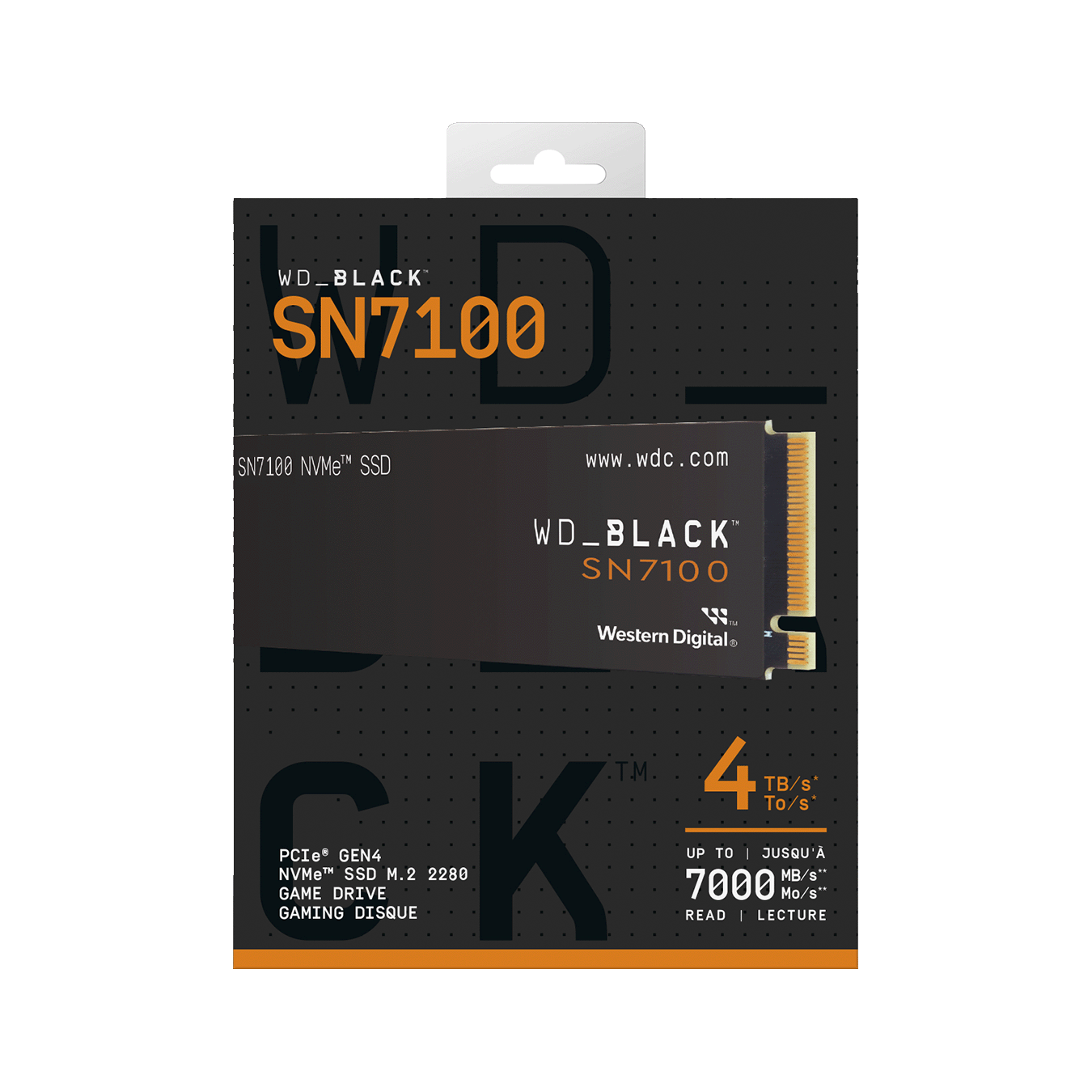
| Capacities | 500 GB, 1 TB, 2 TB, 4 TB |
| Sequential Read Speed | Up to 7,250 MB/s for 1-2 TB models; slightly less (7,000 MB/s) for 4 TB; also reduced for 500 GB. |
| Sequential Write Speed | Up to 6,900 MB/s (1-2 TB); 6,700 MB/s for 4 TB; lower for 500 GB. |
| Random 4K IOPS | Very good: up to 1,000,000 IOPS random read/write for 1-2 TB. The 500 GB model is lower. |
| NAND / Controller | Uses Kioxia’s BiCS8 TLC NAND (218-Layer) with SanDisk / WD co-designed controller (Polaris 3). |
| DRAM / Cache | DRAM-less design; uses Host Memory Buffer (HMB) instead of onboard DRAM. |
| Endurance / Warranty | 5-year warranty. The 4 TB model has endurance up to 2,400 TBW; smaller capacities have proportionately lower TBW. |
| Power Efficiency | Designed for good power efficiency; especially suitable for laptops / portable / handheld gaming. WD claims “up to 100% more power efficiency at max speed” over the previous generation. |
Performance Differences by Capacity
Because of NAND / controller limitations, the capacities have different performance characteristics:
-
500 GB: Good read/write speeds but lower than the mid-capacity SKUs (1-2 TB). For example, sequential speeds are somewhat reduced, and random IOPS also lower.
-
1-2 TB: Sweet-spot. Best balance of high sequential read/write, high IOPS, good endurance.
-
4 TB: Slightly lower peaks in speed due to more NAND dies, but still excellent. Higher endurance. Good choice if you need maximum space.
Pros & Cons
Pros
-
Very high sequential speeds — excellent for gaming, large file transfers, content creation.
-
Good random IOPS, especially in 1-2 TB, which helps with load times, multitasking.
-
Excellent power efficiency, which helps in portable devices.
-
Large maximum capacity (4 TB) means more space for games, content.
-
Solid warranty and endurance.
Cons / Trade-offs
-
The 500 GB version is disadvantaged compared to larger SKUs in speed / IOPS. If possible get 1-2 TB unless you are constrained by budget / space.
-
DRAM-less design may hurt sustained write performance under some workloads though for most gaming/use-cases that might not be noticeable.
-
Pricing/performance ratio might not beat some competitor drives in certain regions.


Reviews
There are no reviews yet.